
World Environment Day Message from Development and Investment Bank of Türkiye: The Future of the World Lies in Sustainable Development
TKYB CEO İbrahim Öztop stated that the crisis caused by the COVID-19 pandemic had made the United Nations Sustainable Development Goals even more relevant. “Working for Türkiye’s sustainable development since 1975, our Bank prevented 2.63 million tonnes of carbon dioxide equivalent emissions per year in 2019 through the renewable energy and energy-efficiency investments it financed. This corresponds to the positive impact that would be generated by 120 million mature trees,” he said.
In his message marking World Environment Day on June 5, TKYB CEO İbrahim Öztop drew attention to the importance of sustainable development for the future of nature and society.
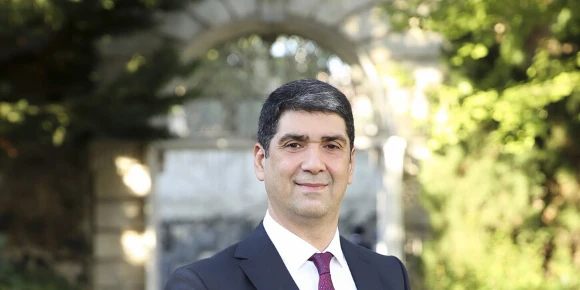
Recalling that World Environment Day has been observed every year on June 5 since 1974 following a decision adopted at the United Nations Conference on the Human Environment in Stockholm, bringing environmental problems and proposed solutions concerning the future of the planet and humanity to the agenda, Öztop said: “The United Nations Sustainable Development Goals, to which we have committed ourselves, are critically important in ensuring that the effects of the COVID-19 pandemic affecting the entire world are overcome with the least possible damage. We observe that broad segments of society are embracing with sensitivity such issues as combating climate change, protecting the cleanliness and biodiversity of the seas, and responsible and sustainable production and consumption. As Development and Investment Bank of Türkiye, we will continue working towards the UN Sustainable Development Goals and our 2023 objectives, when we will celebrate the centenary of our Republic.”
54% of the Loan Portfolio Is Dedicated to Renewable Energy
Stating that the renewable energy and energy-efficiency investments financed by Development and Investment Bank of Türkiye had prevented 2.63 million tonnes of carbon dioxide equivalent emissions per year in the previous year—an impact equivalent to that generated by 120 million mature trees—Öztop said: “Renewable energy and energy-efficiency projects account for 54% of our Bank’s loan portfolio. As of May 31, 2020, Development and Investment Bank of Türkiye had allocated approximately TRY 11.697 billion in loans to 476 renewable energy investment projects with total installed capacity of approximately 3,639 MW. Through the renewable energy and energy-efficiency investments we finance, we enabled the generation of clean energy equivalent to the needs of approximately two million homes. These investments contribute not only to combating climate change but also to improving urban air quality. In addition, by supporting energy-efficiency projects that reduce losses in electricity-distribution systems, the energy needs of approximately 15 million end users are met with greater quality, stability and security, while average annual energy savings of 500 million kWh are achieved.”
Support for Energy Generation from Municipal Waste
Öztop stated that, in addition to solar, wind, hydroelectric and geothermal projects, the Bank also provided financing support for landfill-gas-to-energy and energy-efficiency projects, and continued:
“Through the biomass investments we finance, we have contributed to generating clean energy from approximately 25% of the total municipal waste in our country. We are continuing work on the Türkiye Geothermal Development Project signed with the World Bank. Through the Risk Sharing Mechanism, which aims to cover the risks involved in resource exploration and well drilling for geothermal energy investments, we seek to encourage investment in geothermal fields. We will continue supporting exemplary energy-efficiency projects, such as the establishment of a 40-megawatt energy facility through financing provided to a company whose plant operates using flue gas and waste heat. This facility generates approximately 400 million kilowatt-hours of energy annually. As a Bank, in addition to renewable energy, we will continue prioritising energy-efficiency projects that support the effective use of our country’s resources. For every investment we finance, regardless of its subject or amount, we conduct an environmental and social risk assessment in accordance with international standards. Based on this work, we identify the actions required to prevent environmental and social risks and ensure their implementation.”
Responsible Banking
Recalling that the Bank was a founding signatory of the Principles for Responsible Banking established by the United Nations Environment Programme Finance Initiative (UNEP FI) to increase the banking sector’s impact on a sustainable future, İbrahim Öztop said:
“Activities and performance regarding alignment with the Principles for Responsible Banking must be reported within 18 months. We are continuing our work towards this requirement within our Bank. We are a member of the UN Global Compact, the world’s largest corporate sustainability initiative, representing companies of different sizes from many sectors across 173 countries. The Global Compact’s Ten Principles form the foundation of all our Bank’s activities and lending criteria. We are also a signatory to the Global Compact Türkiye Sustainable Finance Declaration. We participate in the CDP Climate Change Programme, through which more than 8,000 companies voluntarily disclose their greenhouse-gas emissions and climate-change strategies to the public. We are a member of the Business Council for Sustainable Development Türkiye and participate in the association’s activities and events. In addition to all this work, we are especially proud to have two forests in Ankara bearing our Bank’s name. We plan to establish the Development and Investment Bank of Türkiye Forest in Istanbul in 2021. We will also publish our sustainability report in the near future. Inclusion in Borsa İstanbul’s Sustainability Index is among our short-term objectives.”